

Excavators of different models often have similar appearance of accessories,but there are differences in internal parameters and installation dimensions,making it easy to make mistakes based solely on the naked eye.To determine whether the accessories are compatible with the machine,it is necessary to combine the body information,part number,physical comparison,and multi-dimensional verification of operating parameters to avoid malfunctions after incorrect installation.
Firstly,collect complete identification information of the device.Record the excavator model,body nameplate serial number,and year of manufacture to confirm emission standards.The same model of excavator may have version changes in accessories due to different production batches,three countries,and four versions.It is not enough to just look at the appearance of the equipment.Prioritize searching for the original OE part number,which is the most authoritative basis for determining compatibility.When the old parts are intact,check the part number engraved on the old accessory body;If the old parts are damaged and cannot be seen clearly,you can refer to the equipment parts manual or provide the body number to the accessory merchant to retrieve the original accessory catalog.
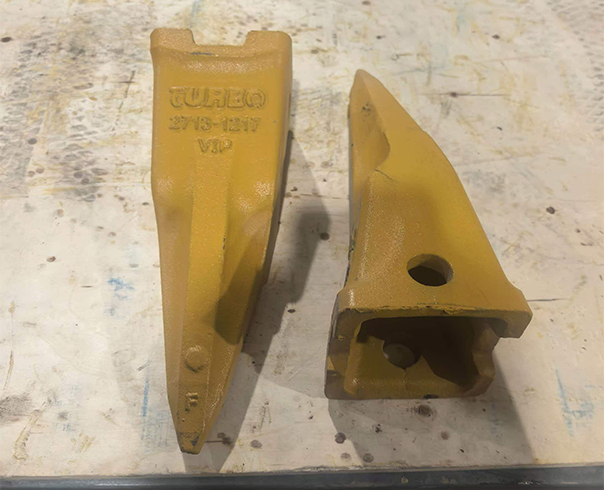
Secondly,distinguish between specialized parts and general parts.A few exterior components,simple sealing rubber rings,and some sensors can be used interchangeably on the same platform model.The core components such as Hydraulic Pumps,distribution valves,oil cylinders,engine pistons,and four-wheel Belts are mostly specialized for the machine model.We cannot easily believe merchants'verbal claims of"universal",as many accessories only have similar appearances and performance parameters that do not match.The core components must be checked for part numbers,and orders cannot be placed directly to save time.
Then conduct physical comparison and verification.After receiving the accessories,compare them item by item with the original old parts of the car.Check the installation hole position,screw point position,shaft diameter,spline specification,pipeline thread,and joint position.Some accessories look roughly the same,but the screw holes are offset and the oil port direction is different,which can interfere with forced assembly and cause vibration and oil leakage after operation.Hydraulic components should focus on displacement and pressure;Check the horsepower and displacement parameters of the Engine Parts.Even if the parameters do not match,problems such as weakness and high temperature may occur even if they are installed.
We also need to consider differences in operating conditions and versions.Some accessories have upgraded replacement parts.Although the part number of the replacement parts has changed,the host factory confirms that they are compatible before they can be used;Do not use parts that are used to replace other models without authorization.For example,fuel injection accessories for National IV models cannot be mixed with National III models.Forcefully using them will result in a fault code and malfunction.
After assembly,conduct a no-load test to verify.After installation,do not directly load the construction.Run at low speed without load,observe for any abnormal noise,leakage,or movement,and ensure that the pressure and speed meet the equipment standards.Confirm that everything is normal before putting it into operation.Try to choose merchants who can provide verification services for procurement,and keep communication records of the body number and part number.
In summary,the adaptability of excavator accessories cannot be judged solely by visual appearance.Based on the body serial number and OE part number as the core,compare the physical dimensions,distinguish version differences,and finally conduct a trial run for confirmation.Multiple verifications are necessary to effectively avoid incorrect purchases and installations,and reduce losses from excavator downtime and maintenance.
This website uses cookies to ensure you get the best experience on our website.
 Español
 Pусский
 Français
 العربية


Comment
(0)