

When the Hydraulic Pump Assembly malfunctions,it is necessary to distinguish the source of the fault and choose to repair or replace the assembly reasonably.Blind maintenance can lead to repeated failures,while random replacement can increase costs.Therefore,a comprehensive judgment should be made based on the symptoms of the failure,the degree of internal damage,and the operating conditions of the equipment.
Firstly,observe the abnormal operation of the equipment and conduct a preliminary investigation.The equipment exhibits weak movement,pressure does not meet standards,and the operating speed slows down.At the same time,the Hydraulic Pump position emits continuous sharp abnormal noise and the machine body shakes violently;The hydraulic oil temperature rises abnormally in a short time,and the oil tank has too much foam;Continuous oil leakage at the pump shaft and flange position.If the above situation occurs,it cannot be directly judged that the pump is damaged.External factors such as filter blockage,oil deterioration,pipeline intake,and hydraulic valve failure need to be ruled out first to avoid misjudging other component failures as hydraulic pump damage.
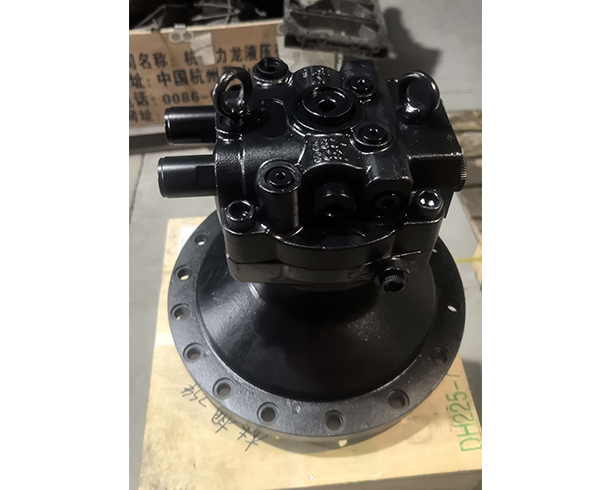
Next,disassemble and inspect the damage to the internal core components.Disassemble the hydraulic pump and inspect key components such as plungers,sliding shoes,distribution plates,bearings,etc.If only the oil seal and sealing components are aging,with only slight wear on the parts and no scratches or grooves,replacing the seals and repairing vulnerable parts can save costs.If the valve plate is eroded,the plunger surface is scratched and grooved,the sliding shoes are broken,the bearings have pitting corrosion,the pump housing has cracks,and a large amount of metal filings are detected in the oil,it indicates that the internal structure has been severely damaged.Even if this situation is temporarily repaired,it will malfunction again shortly after use.It is recommended to replace the assembly directly.
Then compare the maintenance cost with the actual operating conditions of the equipment.If multiple core components are damaged at the same time,the cost of accessories and repair time will reach about half of the new pump assembly,and it is not recommended to repair.Excavators and construction machinery used in high-frequency heavy-duty operations require high reliability,and priority should be given to replacing assemblies when multiple internal parts are worn out;Old low load equipment with limited budget can be repaired under the premise of minimal damage to parts.If metal debris is generated due to internal crushing of the pump,the entire hydraulic circuit will be contaminated,and the entire hydraulic system will need to be cleaned after maintenance,resulting in high overall costs.
We also need to consider the reliability risks after maintenance.The repaired hydraulic pump is greatly affected by the accessory process and assembly level.If the repair manufacturer's technology is insufficient,the repaired pump is prone to unstable pressure,overheating,and oil leakage.Do not forcefully disassemble and repair without professional maintenance conditions.At the same time,with reference to the remaining life of the product,the equipment itself is close to being scrapped,and there is no need to purchase a new assembly.Qualified remanufactured parts can be selected.
In summary,when determining whether to repair or replace a hydraulic pump,it is not enough to just look at surface faults.First,eliminate external factors,then inspect internal parts for damage,weigh maintenance costs,equipment operating conditions,and future use risks.Minor damage can be repaired and continued to be used.If the core components are severely strained or broken,the assembly should be replaced directly to reduce the economic losses caused by downtime.
This website uses cookies to ensure you get the best experience on our website.
 Español
 Pусский
 Français
 العربية


Comment
(0)