

When selecting high-cost-effective Engine Parts,one should not solely pursue low prices.Instead,it is important to consider factors such as model compatibility,product quality,supply capacity,and after-sales support.This involves balancing costs and risks to avoid losses caused by high-quality replicas or inferior products.
Firstly,clarify the compatibility standards and ensure proper model matching as the first hurdle.Before procurement,organize the vehicle identification number(VIN),engine model,and original equipment(OE)part number,and prioritize sourcing channels that support VIN verification.Reliable suppliers should be able to verify parts based on the original factory part number,distinguish the differences in parts between different model years of the same vehicle type,and between domestic and imported engines,to avoid returns and rework due to model incompatibility.For older and less popular models,it is important to confirm that the supplier has the capability to search for and reorder parts,reducing issues of incorrect or missing deliveries.
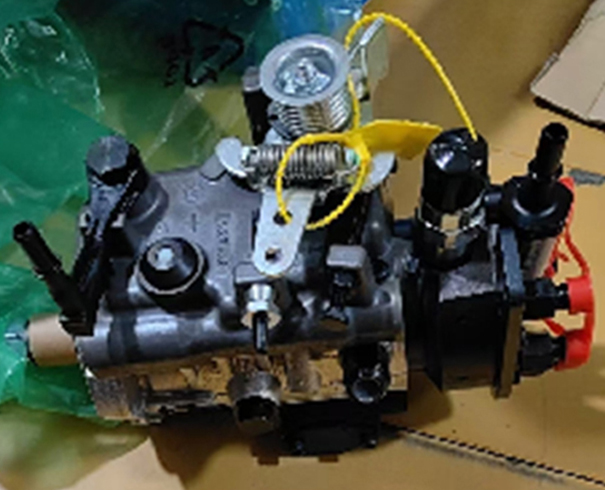
Secondly,it is essential to screen the qualifications of supply sources and select accessory types based on their levels.Supply sources are primarily categorized into original factory authorized channels,official brand supporting manufacturers,high-quality remanufactured parts,and general non-original factory sources.Original factory parts offer stable quality but at a higher price;official brand supporting parts have undergone industry quality certification and are the preferred choice for cost-effectiveness;remanufactured parts are suitable for non-core component procurement with limited budgets;general non-original factory sources carry higher risks,and core components such as crankshafts and pistons should be avoided as much as possible.When purchasing,it is important to verify the supplier's business qualifications and brand authorization letters,reject sources with unclear origins or without certification,and prioritize direct supply channels from the source to reduce markups by multiple intermediaries.
Furthermore,comprehensively evaluate the supply strength and compare prices rationally.When comparing prices,it is important to consider not only the unit price but also the logistics costs,delivery timeliness,and return and exchange costs.High-quality suppliers should have a certain amount of stock on hand,with regular accessories available for quick delivery and less common accessories having stable channels for replenishment.Be wary of suppliers offering prices far below the market average,as low prices often indicate high-quality counterfeit or refurbished parts.It is advisable to compare prices from multiple suppliers and give priority to those with sufficient inventory and transparent pricing.Take into account both the purchasing price and the stability of supply to prevent stockouts that could affect maintenance progress.
Attach equal importance to after-sales service and quality assurance.For regular sources of goods,it is necessary to clarify the warranty period,agree on return and replacement rules for incorrect deliveries and quality issues,and support product batch traceability.For initial cooperation,small batches can be trialed to inspect the workmanship and dimensional accuracy of accessories,and long-term cooperation can be established after confirming that the quality meets standards.Prioritize suppliers who can provide technical consultation,so that professional guidance can be obtained in case of questions about accessory compatibility.
In summary,high cost-effectiveness does not equate to the lowest price.Based on model compatibility,it is essential to verify supplier qualifications,select appropriate accessory grades,and comprehensively consider factors such as price,supply timeliness,and after-sales service.By establishing stable cooperation through trial procurement,we can control costs while reducing the risk of using engine accessories.
This website uses cookies to ensure you get the best experience on our website.
 Español
 Pусский
 Français
 العربية


Comment
(0)