

After severe wear and tear of Excavator Parts,choosing replacement parts should not only pursue low prices,but also consider the importance of the parts,equipment working conditions,and equipment residual value,taking into account adaptability,quality,and cost,to avoid short-term damage after replacement.
Firstly,confirm the accurate model and compatibility parameters of the accessories.Severe wear and tear of accessories often leads to deformation of old parts and blurred identification.Do not choose directly based on the appearance of the naked eye.Prioritize retrieving the local machine body number and querying the original OE part number;If the old parts are still measurable,record key parameters such as installation dimensions,shaft diameter,splines,oil port specifications,pressure and displacement.For hydraulic and engine components with severe wear and tear,it is also important to pay attention to differences in equipment versions.National III and IV parts should not be mixed,and merchants should avoid verbally using"universal parts".
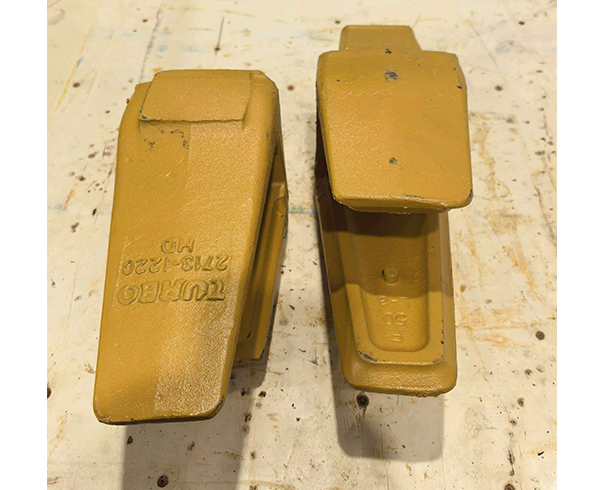
Secondly,the selection criteria are divided according to the importance level of the accessories.Core key components such as Hydraulic Pumps,distribution valves,engine crankshafts,and cylinder liner components,once damaged again,can cause chain failures and result in high downtime losses.For high-frequency heavy-duty construction sites,new or high-value second-hand phones,priority should be given to original parts or first-line brand accessories.The budget for old excavators is limited,and qualified remanufactured parts can be selected to avoid inferior sub factories.
Wear and tear of vulnerable parts of the chassis,such as support wheels,sprocket wheels,and track shoes,is considered normal wear and tear.Long term high-intensity construction,choose original factories or high-quality brand sub factories;If the equipment is close to being scrapped and used for a short period of time,ordinary auxiliary parts can be selected,but inferior products with thin materials cannot be used.It is not recommended to use cheap defective parts such as seals and filters,as poor quality filters can allow impurities to enter the hydraulic system and indirectly damage the expensive main pump.
Weigh the investment based on the residual value of the equipment itself.If the excavator has aged,the overall value is not high,and there is severe wear and tear on multiple parts,there is no need to invest in expensive original parts.Instead,reliable brand sub factories or qualified remanufactured parts should be selected to control the total maintenance cost.If you plan to use or sell the equipment for a long time,try to use the key components and accessories as much as possible to maintain the residual value of the equipment.
Conduct a physical comparison and inspection upon arrival.After receiving the replacement parts,compare the hole positions,interfaces,and threads with the remaining old parts,and check the workmanship and material weight.When replacing parts with severe wear,it is also necessary to check the matching parts,such as replacing the pin shaft and checking the bushing,replacing the plunger pump,checking whether the hydraulic oil contains metal powder,and cleaning the oil circuit,otherwise the new parts will be quickly worn out by old impurities.
After assembly is completed,perform a no-load test to confirm that there are no leaks,abnormal noises,or abnormal pressure,and then put it into heavy-duty operation.At the same time,agree on quality assurance with the merchant and retain the purchase voucher.
In summary,when selecting replacement parts due to severe wear and tear,it is important to first verify the accuracy of the compatible model;Core components prioritize quality,while old equipment balances cost;Replace and inspect the dual parts simultaneously,and clean the system impurities.Reasonably selecting replacement parts can reduce secondary damage and minimize losses from construction site shutdowns.
This website uses cookies to ensure you get the best experience on our website.
 Español
 Pусский
 Français
 العربية


Comment
(0)